
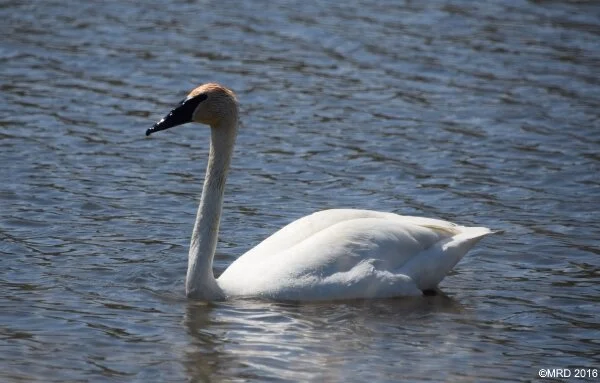
Lagniappe—something extra, something beyond what was labored for, or paid for. A gift. A blessing. Two native swans returning, day after day, to our glacial kettle pond. A return to poetry and the land after a solid year of politics.
It's been a year minus a day since I posted in this blog. That year, I worked more than full time--first as a volunteer, and then as a staffer--on Bernie Sanders' presidential campaign. I am still volunteering for the campaign, and thinking forward, to what comes next: whoever is elected to the presidency, we must--as a species, a country, a state, a county, a community--continue the most important work of our generation: not merely halting climate change and the mass extinction event we're already living through, but healing the earth and ourselves and our fractured institutions as we do so.
The trumpeter swans paddling around our pond are part of a narrative of healing. Trumpeters, the largest species of waterfowl native to North America, nearly went extinct in the early half of the twentieth century. Fewer than 70 were known to exist in the wild in 1933, and even these were dwindling. When several thousand were found near the Copper River in Alaska, wildlife organizations reintroduced them to the parts of North America where they were native. Here's the good news: we can do this. We can heal what we have broken. The population of trumpeter swans is now is nearly 50,000.
And the two swans who chose our pond as their home? Six years ago, it wouldn't have happened. The pond that must have existed here for centuries had been cultivated away. The basin had some standing water in spring that drained away by early May. The land was tilled and sprayed with glyphosate. Corn, wheat, or soy were planted year after year.
We made the basin part of our native prairie. And after six years of no tillage, no spraying, no mechanized equipment, and no seeding (except of native plants), plant debris is building up in the bottom of the pond basin, deeper each year. The soil is settling. The pond fills to a higher level and remains wet longer each year. There's plenty of submerged, decaying plant materials and amphibians for swans and ducks to feast on.
We humans need to eat too. Farmland is a good thing when stewarded well. I'm finding ways to wed my work on the land and on poetry with the political work I feel I must continue. Too much is at stake.
But our souls and spirits also need poetry. And the swans.