
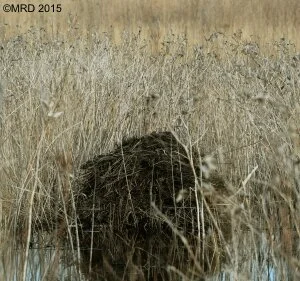
Lagniappe—something extra, something beyond what was labored for, or paid for. A gift. A blessing. A muskrat den where no muskrats have lived for over a hundred years.
The concert of frogs—peepers and chorus alike—is raucous in the pond this year. I walk slowly down the slope, hoping not to interrupt them. And there it is: the muskrat den, hidden in the still-strong stalks of last summer’s blue vervain and rose milkweed.
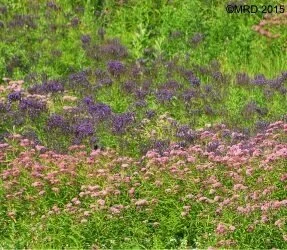
Our pond is an ephemeral kettle pond. Ephemeral is fancy shorthand for saying that the pond dries up—or, more accurately, drains into and refreshes the aquifer deep below—most summers. Kettlepond means the pond is a glacial artifact.
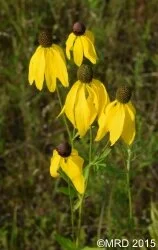
I’ve sometimes wished the pond were more permanent—the water is lovely, the waterbirds love it. But I’ve been told that an ephemeral kettle pond is a unique and somewhat rare little habitat, and I’ve come to love the purple-blue and rosy pink and yellow native flowers blazing at its bottom in late summer.
We’ve never had a muskrat den before. I sit by the pond as dusk comes on, and sometimes hear splashes I feel quite certain are not frogs. So far, the pond has had a good amount of water. But I keep checking the forecast, hoping for rain. Coyotes might be able to get to the muskrats if the level drops.
But mostly, the sight of the den is a joy. A sign of the land returning to health. Perhaps long ago, the ancestors of these muskrats lived here, too.